- Department of Biotechnology
- Department of Botany
- Department of Zoology
- Department of Chemistry
- Department of Computer Science
- Department of Commerce and Business Management
- Department of English and Second Languages
- Department of Food Science and Quality control
- Department of Geology
- Department of Microbiology
- Department of Mathematics and Statistics
- Department of Nutrition and Dietitics
- Department of Physics and Electronics
- Department of Business and Mangement(M.B.A)

Department of Botany
The Department of Botany, one of the oldest and most esteemed departments, has consistently advanced in both academic expertise and infrastructure. It offers comprehensive training in fundamental and advanced areas of plant sciences, including phycology, mycology, biosystematics, forest ecology, genetics, invasive biology, molecular biology and genetic engineering. The department is committed to delivering quality education through interdisciplinary and multidisciplinary approaches in teaching and research. Since its inception, the dedicated efforts of faculty and the active engagement of students have contributed to its sustained growth and academic distinction. Emphasizing traditional knowledge, originality, creativity, and critical thinking over conventional methods, the department nurtures well-trained graduates equipped to address contemporary scientific and environmental challenges. Students are encouraged to pursue higher studies and research by recognizing and fostering their individual potential. Upon graduation, they leave the department with confidence and the competence required to succeed in a competitive global landscape.
The academic experience is enriched through diverse activities such as classroom learning, hands-on practical training, herbarium preparation, field explorations, outstation excursions, minor research projects, and internships. The department is well-equipped with essential instruments and facilities, including a herbarium-cum-museum and medicinal garden with RET species that serves as a valuable resource for teaching and research. Its alumni have distinguished themselves in teaching, research and administration, reflecting the department’s enduring legacy of excellence.
Vision
Our VISION is to achieve excellence in plant sciences through innovative teaching and research, and to nurture competent graduates committed to sustainability and societal advancement.
Mission
Our MISSION is to achieve the VISION through quality education, research and skill development supported by an updated curriculum.
HOD’s Message
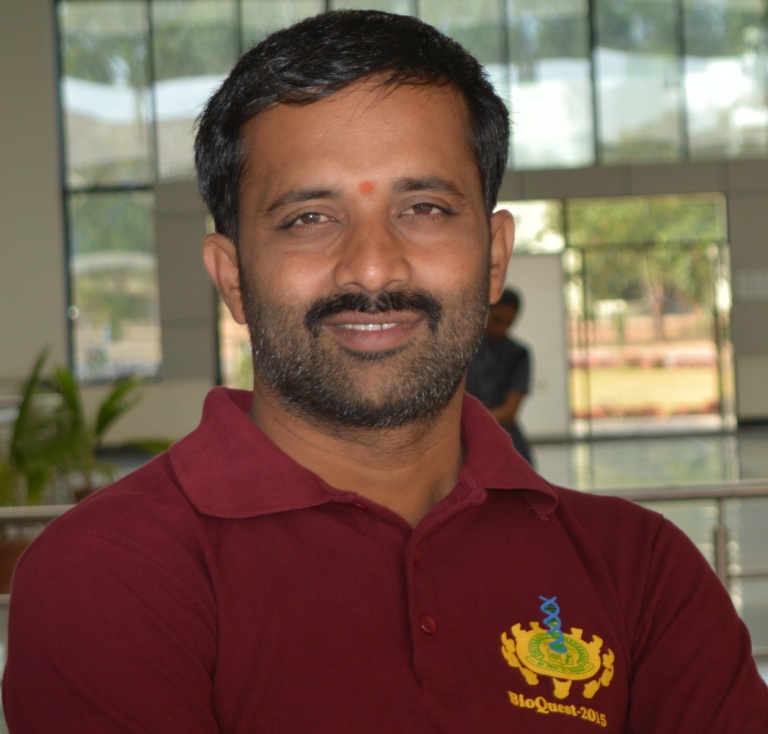
Warm Greetings and Welcome to the Department of Botany.
In tune with Vision and Mission of the Department, the faculty is dedicated to achieve excellence in plant sciences through a dynamic blend of innovative teaching, impactful research in various fields of plant sciences, and meaningful extension activities, supported by a contemporary and interdisciplinary curriculum. Our academic environment fosters intellectual curiosity, critical inquiry, and scientific rigor, empowering students to integrate theoretical knowledge with practical and field-based experiences. With committed faculty and well-developed infrastructure, we nurture analytical thinking, research aptitude, and professional competence.
We actively encourage students to pursue advanced studies and engage in research that addresses pressing global challenges, particularly in biodiversity conservation, environmental sustainability, and ecosystem management. Students are encouraged to participate actively in oral and poster presentations, BOTANIQUE (a signatory program of the Department), publish research articles under the guidance of faculty that helps them to acquire admission in renowned institutes for higher studies.
Our mission is to develop skilled, confident, and ethically responsible graduates who are well-prepared to contribute to the scientific community and society at large in an ever-evolving world with a cheerful, productive and satisfying experience.
WISH YOU ALL THE BEST
Board of Studies
- Dr Sateesh Suthari, Chairman
- Dr P. Harender Reddy, Member
- Mrs. P. Sunitha, Member
- Dr S. Subhash, Member
- Mrs. A. Kavitha, Member
- Mrs. S. Swapna, Member
- Mrs. G. Sunitha, Member
- Mr. P. Ramesh, Member
- Prof. M. Aruna, Subject Expert Outside parent University
- Dr C.S. Reddy, Subject Expert Outside parent University
- Prof. Md. Mustafa, Subject Expert
- Dr K.N. Reddy, Expert from Industry
- Mrs. M. Sreeja, Alumni Member
- Dr K. Omkar, Expert for Special Courses
UG / PG Programmes
UG Programme
I Year
- I Semester (Paper-I): Microbial Diversity and Early Land Plants
- II Semester (Paper-II): Gymnosperms, Anatomy and Embryology of Angiosperms
II Year
- III Semester (Paper-III): Plant Taxonomy, Ecology and Medicinal Botany
- IV Semester (Paper-IV): Cell Biology, Genetics and Plant Physiology
III Year
- V Semester (Paper-V): Biodiversity and Conservation / Tissue Culture and Biotechnology / Economic Botany
- VI Semester (Paper-VI): Plant Molecular Biology / Seed Technology / Analytical Techniques in Plant Sciences
Course Syllabus
Paper-I: Microbial Diversity and Early Land Plants (w.e.f. Academic Year: 2025-2026)
Course Objectives: This course is designed to
- COB 1: To increase the understanding about the microbial diversity and early land plants.
- COB 2: To know the classification, structure and growth of early land plants.
- COB 3: To aware about the adverse effects of pathogens, symptoms.
- COB 4: To know the morphology, internal structure and reproduction in algae, fungi, bryophytes and pteridophytes.
UNIT - I: (15 hours)
- Brief account of Archaebacteria, Actinomycetes and Mycoplasma with reference to Little Leaf of Brinjal and Papaya Leaf Curl.
- Viruses: Structure, replication and transmission; plant diseases caused by viruses and their control with reference to Tobacco Mosaic and Rice Tungro.
- Bacteria: Structure, nutrition, and reproduction. Plant diseases caused by bacteria and their control with reference to Angular leaf spot of Cotton and Bacterial blight of Rice.
UNIT - II: (15 hours)
- General characters, structure, reproduction and classification of Algae (Fritsch).
- Cyanobacteria: General characters, cell structure their significance as biofertilizers with special reference to Oscillatoria, Nostoc and Anabaena.
- Algae: Structure and reproduction of Chlorophyceae – Volvox, and Chara; Phaeophyceae – Ectocarpus; Rhodophyceae – Polysiphonia.
UNIT - III: (15 hours)
- General characters and classification of Fungi (Ainsworth).
- Fungi: Structure, reproduction and life cycle of Albugo, Mucor, Penicillium, Puccinia and Cercospora.
- Economic importance of Lichens.
UNIT - IV: (15 hours)
- Bryophytes: Structure, reproduction, life cycle and systematic position of Marchantia and Polytrichum; Evolution of Sporophyte in Bryophytes.
- Pteridophytes: Structure, reproduction, life cycle and systematic position of Rhynia, Equisetum and Marsilea.
- Stelar evolution, Heterospory and Seed habit in Pteridophytes.
Course Outcome: By the end of the course, the student will be able to
- CO 1: Develop the concept on microbial diversity and early land plants.
- CO 2: Learn the classification, structure and growth of the organisms.
- CO 3: Know the impact of pathogens, adverse effects and control measures.
- CO 4: Aware about the morphology, internal structure and reproductive methods in algae, fungi, bryophytes and pteridophytes.
Paper-II: Gymnosperms, Anatomy and Embryology of Angiosperms
Course Objectives: This course is designed to
- COB 1: To understand the morphology and diversity of Gymnosperms.
- COB 2: To understand about various tissues, tissue systems and growth in plants.
- COB 3: To know about the scope and importance of plant anatomy.
- COB 4: To understand the structure, development of anther, ovule and pollination mechanisms.
UNIT - I (15 hours)
- Gymnosperms: Distribution, General characters, structure, reproduction and classification (Sporne, 1965). Economic importance of Gymnosperms.
- Morphology of vegetative and reproductive parts, systematic position and life cycle of Pinus and Gnetum.
- Introduction to Palaeobotany, Types of fossils and fossilization, Importance of fossils.
UNIT - II (15 hours)
- Meristems: Types, histological organization of shoot and root apices and theories.
- Tissues and Tissue systems: Simple, complex and special tissues.
- Leaf: internal structure of dicot and monocot leaf; Stomata structure and types. Epidermal outgrowths.
UNIT - III (15 hours)
- Secondary growth: Vascular cambium – structure and function. Secondary growth in root and stem, Wood (heart wood and sapwood).
- Anomalous secondary growth of Stem - Achyranthes, Boerhavia, Dracaena; Root - Beta.
- Wood structure: General account. Study of local timbers – Teak (Tectona grandis), Red sanders (Pterocarpus santalinus), and Neem (Azadirachta indica).
UNIT - IV (15 hours)
- Structure of Anther, Microsporogenesis and development of male gametophyte.
- Ovule structure and types; Megasporogenesis; types and development of female gametophyte.
- Pollination mechanisms, Pollen–pistil interaction. Double fertilization.
- Types of endosperm. Embryo structure – dicot and monocot; polyembryony and apomixis - an outline.
Course Outcome: By the end of the course, the student will be able to
- CO 1: Develop the concept on morphology and diversity of Gymnosperms.
- CO 2: Know the composition of body with different tissues, tissue systems and growth type.
- CO 3: Come to know the scope and importance of plant anatomy.
- CO 4: Understand the structure, development of anther, ovule and pollination mechanisms.
Add On Courses / Certification Courses
Roof Gardening
Faculty
- Dr P. Harender Reddy, M.Sc.
- Dr Sateesh Suthari, M.Sc., B.Ed., Ph.D., Young Scientist (SERB-DST), TS SET, TG TET, PGDMB, FIAT, AFTAS
- Mrs. P. Sunitha, M.Sc., B.Ed.
- Dr S. Subhash, M.Sc., B.Ed., Ph.D.
- Mrs. A. Kavitha, M.Sc., B.Ed.
- Mr P. Ramesh, M.Sc., B.Ed.
- Mrs. S. Swapna, M.Sc.
Department Activities / Club Activities
- Organized a National Webinar on ‘Ecosystem Restoration for Sustainable Development’ on the occasion of World Environment Day on June 5th, 2021.
- Conducted a National Seminar on ‘Exploring Emerging Techniques in Plant Sciences’ funded by Telangana State Council of Higher Education (TSCHE), Hyderabad during December 28-29, 2021.
- Organized two-days Joint Science Academies’ Lecture Workshop on ‘Advances in Plant Sciences during 21st Century’ financially assisted by three Joint Science Academies Indian Academy of Sciences (Bengaluru), Indian National Science Academy (New Delhi), the National Academy of Sciences (Prayagraj) during 20th to 21st March, 2024.
- Organized two days training for Extension Officers and Field Functionaries on ‘Organic and Natural Farming’ assisted and organized by Govt. of India, Ministry of Agriculture and Farmers Welfare, DA&FW, Regional Centre for Organic & Natural Farming (RCONF), Nagpur during 4th to 5th November, 2024.
- Department of Botany initiates to organize an event ‘BOTANIQUE-A STUDENT FAIR’ every year to explore the local knowledge on our surrounding plants and their medicinal, cultural and economic importance.
- Conducts field trips on the name of ‘Kshetra Paryatan’ and promotes ‘Internships’ to the students.
Faculty Achievements (Only From Recognized bodies)
Dr P. Harender Reddy is acting as ‘Academic Co-ordinator’ and Vice-Principal.
Dr Sateesh Suthari is acting as an expert member, editorial board member, reviewer for many reputed International Journals (Flora, Chemosphere, Current Science, Ethnobotany Research and Applications, Vegetos, Plant Science Today, Toxicology Reports, Tropical Ecology, Indian Journal of Natural Products and Resources, Asian Journal of Biology, Journal of Agriculture and Ecology Research International, Annals of Plant Sciences, Current World Environment, Bionature, International Journal of Plant and Soil Science, etc.) and resource person to various organizations (Telugu Akademi, Hyderabad; EIA studies) which is magnificent advantage to our Vaagdevi Institutions.
Participated as a field expert in ‘Wildlife Mitigation Plan’: Animal passage and mitigation plan for Hyderabad Regional Ring Road passing through reserved forests in the Medak, Siddipeta and Yadadri Bhuvanagiri Districts (Nov. 2024). National Highways Authority of India (NHAI), Project Implementation Unit, Gajwel-502278; prepared by Prof. K. Kameswara Rao, M. Murali Krishna, Dr M. Tarakeswara Naidu, Dr Sateesh Suthari, Dr B. Vinay Sagar [M/s SV ENVIRO LABS & CONSULTANTS, Enviro House, B-1, Block-B, Autonagar, Visakhapatnam-530012 (QCI-NABET/EIA/2124/RA 0240_Rev 01, NABL Accredited, MoEF & CC Recognized].
Socio-Economic Study of the Impact of PVNR Opencast Mining at Venkatapur and KTK-OC-III Exp on Biodiversity, Heritage, and Socio-religious Importance of Ramappa Temple and Lake financially supported (Rs. 4,00,000 – Four lakh rupees) by Centre for Economic and Social Studies (Planning Dept., Govt. of Telangana & ICSSR-Ministry of Education, Govt. of India), 19th May, 2024.
Tree Enumeration Study work for ISP Nakkapalli, Anakapalli District, Andhra Pradesh grant-in-aid (Rs. 8,00,000 – Eight lakh rupees) by ArcelorMittal Nippon Steel India Pvt Ltd, Mumbai, 21st May, 2025.
Tree Numbering Work for ISP Nakkapalli, Anakapalli District, Andhra Pradesh grant-in-aid (Rs. 24,00,000 – Twenty Four lakh rupees) by ArcelorMittal Nippon Steel India Pvt Ltd, Andhra Pradesh, 27th October, 2025.
Fellow of ARAI (FARAI) – Association of Researchers & Academicians (India) (June 28, 2024).
Ph.D. Guideship
Dr Sateesh Suthari – BESTIU, Anantapuramu, Andhra Pradesh, India
Publications
The faculty members, in addition to their regular teaching responsibilities, are actively engaged in research, with outcomes reflected in quality publications. To date, the department has produced around 73 original research articles in reputed national and international journals, covering key thrust areas such as plant taxonomy, biodiversity, medicinal plants, ethnobotany, forest ecology, NTFPs, biomass and carbon estimation, environmental assessment, and invasive plant studies. Supported by the Management and College Administration, faculty members have also participated in 56 conferences and seminars at various levels, contributing to academic exchange and professional development. Notably, Dr Sateesh Suthari serves as a resource person for Telugu Akademi, Hyderabad; Telugu & Sanskrit Akademi, Vaddeswaram, Andhra Pradesh; Dr BR Ambedkar Open University, Hyderabad and contributes to the preparation of textbooks and book chapters at undergraduate and postgraduate levels.
The department is one of the registered and recognized centers for Herbarium by New York Botanical Garden and International Association of Plant Taxonomy (IAPT) and assigned with an official acronym ‘VHW’ (http://sweetgum.nybg.org/science/ih/herbarium-details/?irn=260447).
Research Articles
- Suthari, S., Omkar, K., Reddy, G.S., Mallesh, M., Kiran, E. and Sreeramulu, N. 2025. A floristic checklist of wetland and aquatic vascular plants of Telangana, India. Plant Science Today 12(4): 1-6. (Impact Factor: 0.8) (Scopus Indexed & UGC Care List II).
- Anishetty, S., Nellutla, N., Suthari, S., Shirisha, M. and Vasanthi, A.V. 2025. An ethnobotanical and folklore study of medicinal plants in Eturnagaram wildlife sanctuary and Malluru forest, Telangana. International Journal of Ayurveda and Pharma Research 13(8): 53-79.
- Mallesh, M., Kalpana, B., Suthari, S. and Narsaiah, S. 2025. Evaluation of protein content of Fall armyworm (Spodoptera frugiperda) on maize and cotton crops in Telangana, India. Journal of Experimental Agriculture International 47(1): 287-291.
- Suthari, S. and Nagaraju, M. 2024. Ecological disaster in the tropical dry deciduous forests of Telangana: challenges and opportunities for restoration. Current Science 127(10): 1139. (Impact Factor: 1.1) [Scopus Indexed].
- Suthari, S., Omkar, K., Jayaramulu, K., Swetha, B., Kiran, E., Naidu, M.T. and Nallella, S. 2023. Inventory of agrestals in Telangana, India: their impact and management. Agricultural Science Digest.
- Suthari, S., Omkar, K., Devi, B.R., Prasad, C.S. and Narayana, L.S. 2023. Iron deficiency and hereditary anaemia in ethnic tribes of Mulugu district, Telangana: a case study. Education and Society 46(4): 126-130.
- Suthari, S., Omkar, K., Kiran, E., Naidu, M.T., Rao, A.R. and Nallella, S. 2023. Natural Gum and Resin bearing plant taxa in Telangana, India. The Journal of Plant Science Research 39(2): 153-166.
- Omkar, K., Suthari, S., Naidu, M.T., Geetha, S., Nallella, S. 2022. NTFPs and socio-economic empowerment in rural economy of Telangana, India. The Journal of Plant Science Research 38(2): 589-602.
- Naidu, M.T., Suthari, S. and Yadav, P.B.S. 2021. Ecological status and tree diversity in Eastern Ghats, India. Acta Ecologica Sinica 43(2): 234-244. [Scopus Indexed].
- Omkar, K., Suthari, S., Rani, V.J.S., Esampally, K., Jayaramulu, K. and Naidu, M.T. 2021. Invasive alien plant taxa in Gundla Brahmeswaram wildlife sanctuary. International Journal of Ecology and Environmental Sciences 3(3): 41-48.
- Suthari, S., Priyadarshini, E.S., Esampally, K. and Nallella, S. 2021. Wild food plants used by indigenous tribes of Telangana. American Journal of Ethnomedicine 8(4): 1-6.
- Suthari, S., Singh, S. and Raju, V.S. 2020. Phytomass and carbon assessment of forests of Northern Telangana using geospatial technique. Biodiversity 21(4): 227-237. [Scopus Indexed].
- Jyothsna, S., Manjula, G., Suthari, S. and Rao, A.S.N. 2020. Trace elemental analysis of medicinal plants using EDXF technique. Heliyon 6: e03260. [Scopus Indexed].
Book Chapters
- Suthari, S., Srinivas, K., Omkar, K., Gul, M.Z. and Sadanandam, A. 2021. Ethnobotanical perspectives in treatment of communicable and non-communicable diseases. (Chapter 9). In: Bhat, R.F., Hakeem, K.R. and Dervash, M.A. (eds.), Phytomedicine: A Treasure of Pharmacologically Active Products from Plants. pp: 251-289. (Elsevier) ISBN: 9780128241097 [Scopus Indexed]
- Lavudi, H.N., Ratnamma, B.K., Badithi, N., Suthari, S. and Durgeshwar, P. 2024. Isolation and characterization of chitin and chitosan from crustacean shell waste. In: Suthari, S. (ed.) Exploring Emerging Techniques in Plant Sciences.
- Lavudi, H.N. and Suthari, S. 2024. Biology and conservation aspects of Cycas sphaerica. In: Suthari, S. (ed.) Exploring Emerging Techniques in Plant Sciences.
- Sainuddin, F.V., Mathew, S.M., Saranya, K.R.L, Suthari, S., Asok, S.V. and Reddy, C.S. 2024. From Field to Map: biomass estimation using remote sensing. In: Suthari, S. (ed.) Exploring Emerging Techniques in Plant Sciences.
- Naidu, M.T., Suthari, S., Reddy, M.S. and Yadav, P.B.S. 2024. Tree species composition in Eastern Ghats forests. In: Suthari, S. (ed.) Exploring Emerging Techniques in Plant Sciences.
Books Authored
- Microbial Diversity and Lower Plants; Gymnosperms, Angiosperm Taxonomy & Ecology (B.Sc. CBCS, Telugu Akademi, 2020) — Authors: Prof. S. Ram Reddy, Dr D. Nagaraju and Suthari, S.
- Plant Anatomy, Embryology and Palynology (B.Sc. CBCS, Telugu Akademi, 2020) — Authors: Prof. S. Ram Reddy, Dr D. Nagaraju and Suthari, S.
- Teacher Recruitment Test (DSC) – Biological Sciences Content (Telugu Akademi, 2025) — Authors: Suthari, S. and team
- NEET Question Bank Volume I (Telugu Akademi, 2025)
- Intermediate I Year Textbook (Reviewer role, Telugu Akademi, 2025)
- M.Sc. Botany Course Material (Dr B.R. Ambedkar Open University, Hyderabad)
- NEET Question Bank Volume II (Telugu Akademi, 2025)
- Intermediate II Year Textbook (Telugu Akademi, 2025)
- Wild Edible Plants of Telangana, India: A Pictorial Guide to 100 Natural Foods (Vedashree Publishers)
Books Edited
- Suthari, S. (ed.) 2024. Exploring Emerging Techniques in Plant Sciences. Vaagdevi Degree & PG College (A), Hanumakonda. ISBN: 978-93-5406-563-7.
- Teacher Recruitment Test (DSC) – Biological Sciences Content (Telugu Akademi, 2025). Editor: Suthari, S.